

How Much Should You Keep in Your Checking Account?
Stop guessing. Use a simple Bills + Buffer rule to decide what stays in checking, avoid overdrafts, and move the rest somewhere smarter.
Disclaimer: This post is for general information only and is not financial advice.
In this post
Most people keep either way too much in checking (so it earns nothing) or way too little (so one weird timing issue turns into an overdraft).
The goal is not to optimize checking. The goal is to make checking boring.
Why this number matters
- Too little in checking means overdrafts, declined payments, and that annoying “why is my bank mad at me” energy.
- Too much in checking means your money is just sitting there when it could be building your emergency fund, funding sinking funds, or earning interest.
The Bills + Buffer rule (simple, not cute)
Here's the rule:
Checking balance target = Bills + Buffer
“Bills” are your upcoming payments before your next payday. “Buffer” is your margin for real life: timing issues, price changes, and the occasional “oops.”
The rule, written down
You're not trying to predict every transaction. You're building a system that can handle the predictable stuff and the messy stuff.
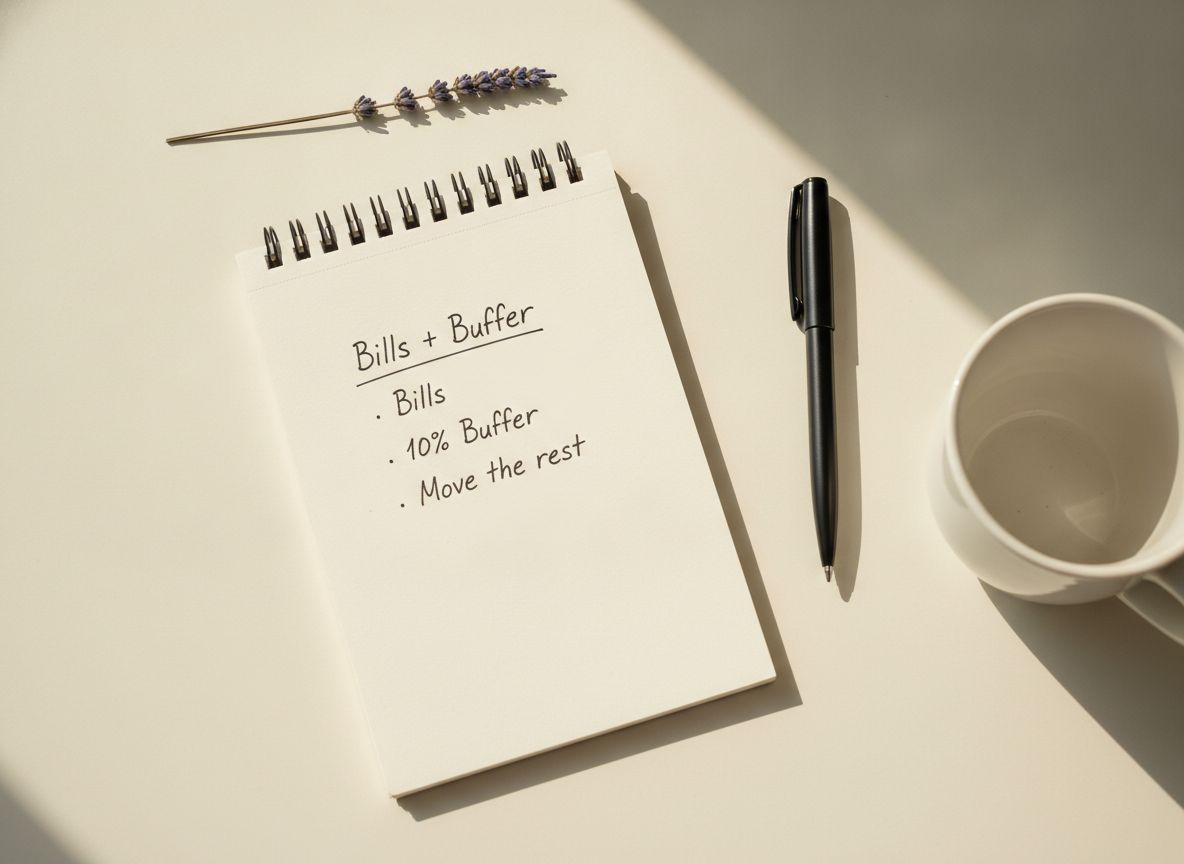
How to calculate your number (in 10 minutes)
- List your bills that will hit before your next payday (rent, utilities, subscriptions, minimum debt payments, childcare, etc.).
- Add them up.
- Add a buffer. A simple starting point is 10% of your bills total.
- That's your checking target.
A quick example
If you have $2,000 in bills before your next payday, a 10% buffer is $200.
Your checking target is $2,200.
Where the rest should live (so it actually helps you)
Once checking is funded for Bills + Buffer, the rest of your cash should have jobs.
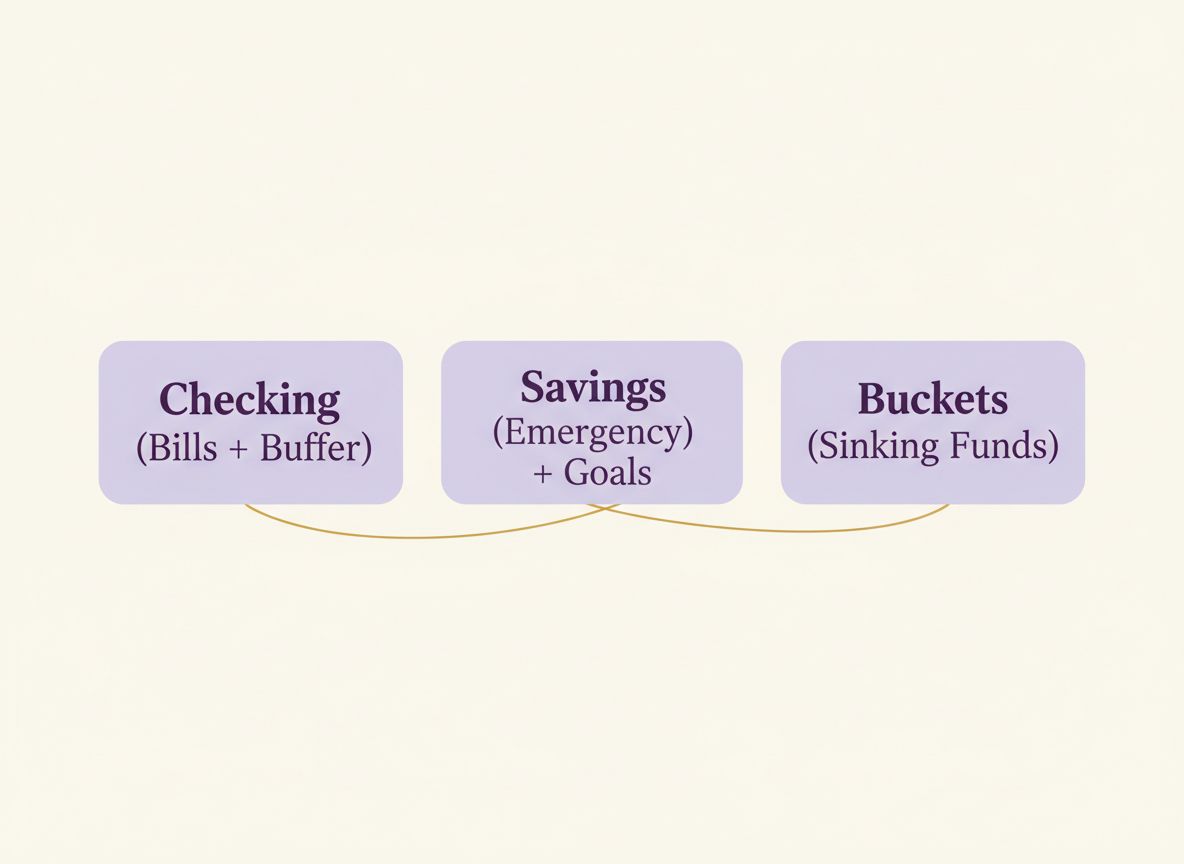
The calm setup
- Checking: Bills + Buffer
- Savings: emergency fund + goals
- Buckets (sinking funds): irregular expenses like travel, gifts, car repairs
If you need a bigger-picture system for all of this, start with our budgeting framework. It's designed for real life.
Common mistakes (and how to avoid them)
Mistake: Using checking as your emergency fund
Fix: Keep checking for Bills + Buffer. Build your emergency fund in a separate savings account so you don't accidentally spend it.
Mistake: Setting a buffer that's too tight
Fix: If you're getting overdrafts, your buffer is too small. Increase it until checking stays calm.
Mistake: Keeping “everything” in checking because it feels safe
Fix: Safety is having a plan. Once bills are covered, move the rest to savings and buckets so it's working for you.
Want a simple system to organize all your accounts?
Start with the budgeting framework and set up your Floor, Buffer, Peaks, Joy, and Reset. It's the foundation for everything else.